Three weekends, roughly $240 of dimmers, switches and ceiling fans from the big box store, and one 2003 Lakewood Ranch house where every single device worked fine on Sunday night. Five months later two of those dimmers were warm enough to feel through a fingertip, half of a bedroom receptacle was dead, and the porch fan wobbled at low speed on a switch that clicked and did nothing else. A surprising share of calls booked for electrical services lakewood ranch fl begin right there, with a homeowner’s own neat work rather than a component that failed on its own. The parts were not the problem. DIY electrical work almost always fails at two points, the device rating and the termination, and both of those are decided before the cover plate goes back on.
Store Bought Dimmers Fail On Ceiling Fan Loads
A dimmer is not a general purpose switch. It is built for one load type at one wattage range, and a fan motor is not the load most of them were designed around. Put a standard lighting dimmer on a ceiling fan and you get hum at low speed, a wobble that looks mechanical but is not, and a device running hot because it is chopping current to a motor it was never rated to control. The allowed load is printed right on the yoke, in small gray letters, on the side nobody looks at while balancing on a ladder.
Ten years ago the mismatch was more forgiving than people remember. A room full of 60 watt incandescent bulbs pulled enough current to keep a cheap dimmer stable, and when something did quit it was usually the bulb. Now the same remodeled house runs LED fixtures drawing six to nine watts apiece, and that $14 dimmer sits under its minimum load, where it flickers, buzzes, or cooks itself slowly. Same box, same wire in the wall, completely different electrical behavior. The upgrade everyone made for the power bill quietly changed what the switch behind it needs to be.
The case that turns up most often on a three weekend project like this one is not a burned out fan at all. It is a lighting dimmer doing a fan speed control’s job for a few months until heat wins. Budget about $30 a device to put the right controls in across five rooms, so roughly $150 in parts. Honestly, closer to $220 once you count the two three way switches that were also mismatched and the neutral connections the newer LED compatible dimmers need in the box.
See also: How to Choose the Right Cube Sauna Size for Your Space for Beginners
Back Stabbed Outlets Loosen And Run Hot
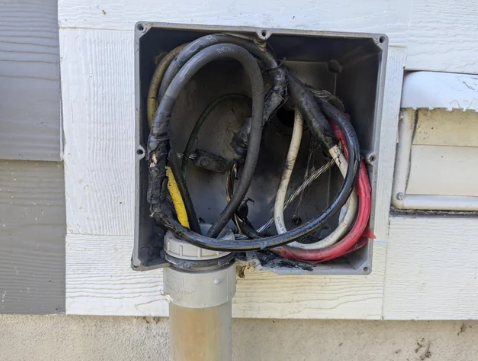
Flip a receptacle over and there are two ways to land a wire: spring loaded holes in the back, or screw terminals on the side. The back holes are faster, which is exactly why a Saturday afternoon job uses them. Their contact patch is a fraction of what a properly torqued screw gives you, and across a few Florida summers of heating and cooling inside an uninsulated wall cavity, that spring relaxes, resistance climbs, and heat shows up where nobody is looking. Half a duplex going dead is the signature result, because the downstream outlets on that circuit were fed through the same tired clip. The spring does not care how confident you felt on Saturday.
Sound arrives before the smell does. The Electrical Safety Foundation International guidance posted on its site back in May 2026 treats buzzing from outlets or switches as a call an electrician situation rather than an appliance quirk, because that noise generally means arcing or loose connections behind the plate. Homeowners tend to file it under old house noise. A buzz at a switch is a wiring symptom, not a personality trait. Anything you can hear from a device is already further along than anything you can see.
So state the rule plainly. A switch plate that is warm, a burning or fishy smell near a device, scorch marks or browning around a receptacle: shut off the breaker, stop using that circuit, and have a licensed electrician inspect it before anything goes back into service. If someone does take a shock, federal guidance from the CDC on what to do around electrical hazards is to look first and do not touch, since the victim may still be in contact with the live source; call 911 and get the current off before you go near them. That instruction exists because the instinct to grab someone is what turns one injury into two.
None of this is a comment on anybody’s competence. It is about which failures announce themselves and which ones sit quiet inside a wall.
Knowing When To Stop Is The Real Skill
Swapping a light fixture for a like sized replacement on the same box and the same load type is reasonable homeowner work. The line moves once you are adding a circuit, touching a panel, hanging a fan on a box that was never rated for a moving load, or chasing why a three way pair only works in one direction. A search for electrical services lakewood ranch fl returns plenty of licensed shops, so the more useful question is what you hand them and what you keep. Whether a permit is required for a given swap varies by jurisdiction, so ask the county building department rather than a forum thread, and get the answer before the drywall closes.
The honest tally on that 2003 house was one afternoon of a licensed electrician’s time, five corrected devices, and a couple of receptacles retermined on screws. Cheaper than the fan. Far cheaper than a wall repair. The weekend work was not wasted either, because the boxes were clean, the wire was intact, and the homeowner could point straight to every device he had touched, which cut the diagnostic time roughly in half. Knowing the rating on the back of a device and the difference between a spring clip and a screw is most of what separates a fix that holds from one that comes back in March.