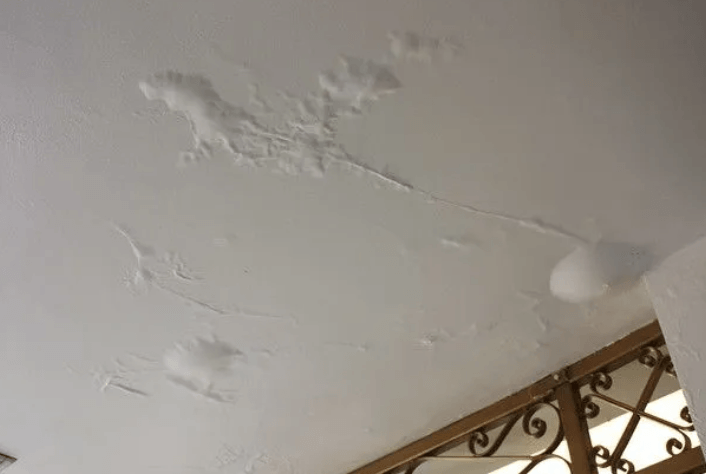
If the ceiling stain comes back every spring and the sealant patch you applied is still perfectly intact, the leak was never under the patch. Water gets in high, travels along the decking or down a rafter, and drips out at the first spot that lets it go. That gap between where water enters and where it shows is why roofing companies eagan mn open a repair with a diagnostic inspection instead of a caulk gun. Seal the exit and you have sealed nothing. The argument here is plain: tracing water back to its real entry point and fixing that costs less than repatching the same eight inches of shingle every March.
Water Travels Before It Shows On A Ceiling
Roof decking was never meant to be watertight on its own. Water that slips past a shingle course rides the slope of the plywood, follows a nail shank, lands on the top edge of a rafter, and runs sideways until something interrupts it. Six feet of horizontal travel is ordinary. On a 1970s split-level with an attached garage, the change in roof planes gives water more room to wander, which is why the stain so often lands over the garage door header while the failure sits well upslope of it. Before anyone goes looking, one rule holds without exception: never walk a roof that is wet, frosted, iced, or steep, and never climb during the storm that exposed the leak. OSHA’s roofing guide recommends that employers consider suspending roof operations in high winds, wet weather, and icy conditions, because those surfaces turn slippery and create dangerous working conditions, and that recommendation does not soften because the house is yours. Have the inspection run from a ladder by somebody equipped for it.
Sealant Hides The Symptom And Buys One Season
Two tubes of roof cement is about where most homeowners land before the phone call, and the logic makes sense. You saw the stain, you found the nearest questionable spot on the roof above it, you sealed that spot, and the drip stopped. It stopped because you happened to block one of several paths, or because the dry months showed up on schedule. Job after job, what turns up is a failure the patch never touched: step flashing, meaning the small L-shaped metal pieces woven between shingle courses where a roof meets a wall or a chimney, rusted through at the bottom lap. That patch was on borrowed time from the day it cured.
Flashing is the usual answer, not the open shingle field. A February 2026 guidance page from the National Roof Certification and Inspection Association puts flashing at chimneys, vents, skylights and valleys among the primary suspects in any leak investigation, since failed sealant or split metal there hands water a direct channel into the structure. Ice dams do something similar in March: meltwater backs up under the shingles above a cold eave and enters behind everything a patch can reach. A single popped nail will do it too, quietly, for years.
Tracing A Leak Costs Less Than Repatching Twice
Run the arithmetic on that split-level. Two tubes of roof cement at roughly $14 each plus a $9 wire brush is $37 in materials and two Saturday mornings, and the stain came back in March anyway. Say the real fix is eleven feet of step flashing replaced along the garage wall with the shingle courses woven back in, and call it $850, sitting mid-range in the $400 to $1,800 that repairs of this kind usually fall into. Now add next spring’s patch and the one after that, another $74 in cement, plus the drywall over the garage door header you eventually cut out and replace, somewhere around $450. The patch route comes to about $560 spent chasing a stain that is still coming back, against $850 spent once on the thing that was actually broken.
What I cannot give you is a number for how long a patch holds. Nobody tracks that, and the honest answer depends on where the water is really coming from, how cold the eave runs, and how much granule loss the shingles around it already have. Some patches hold four years. Some fail on the second freeze-thaw swing, and there is no telling which one you bought until spring reports back.
See also: How to Choose the Right Cube Sauna Size for Your Space for Beginners
Chase The Entry Point Not The Stain
Stop treating the stain as the location. It is the exit, and it is the last place worth sealing. Ask whoever comes out, and this goes for the roofing companies Eagan MN homeowners have used for years, to show you the entry point and walk you through how water got from there to your ceiling before anybody quotes a repair. A fix built on that answer holds through the next thaw. One built on a guess only moves the stain a few feet.